Teresa's Insect Adventure in Costa Rica
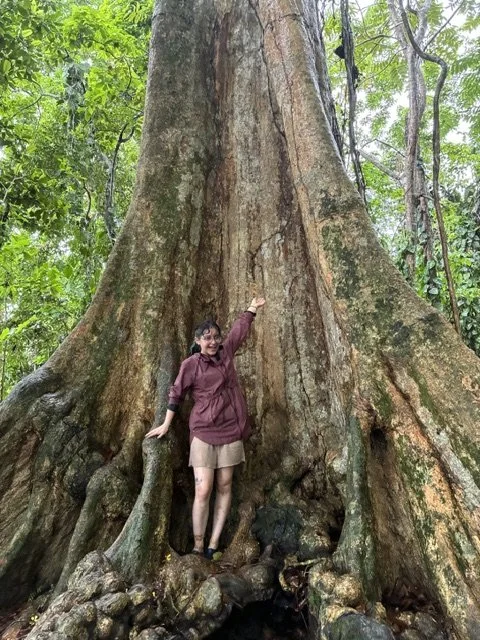
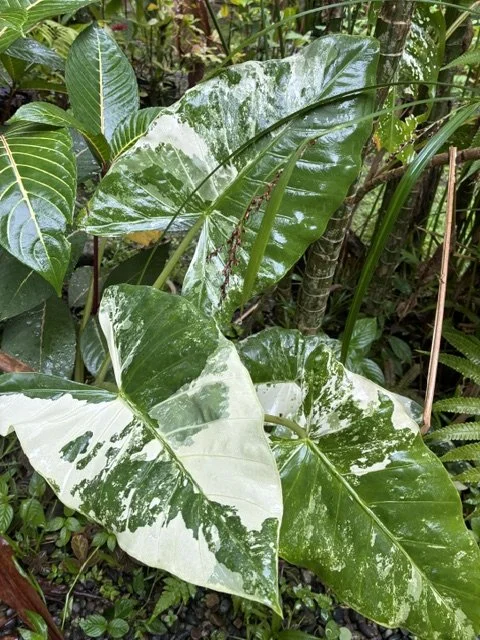
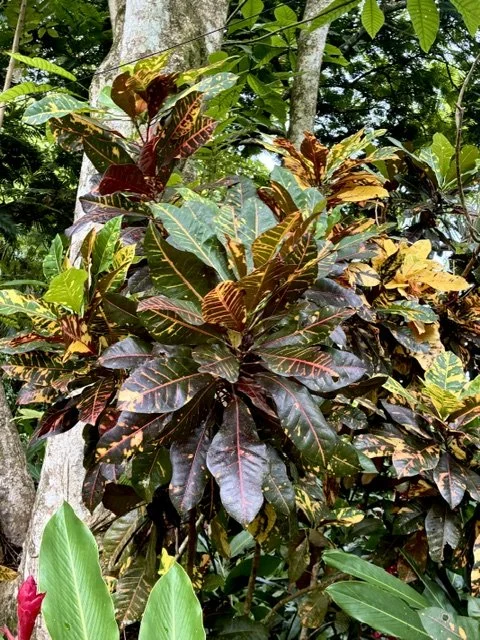
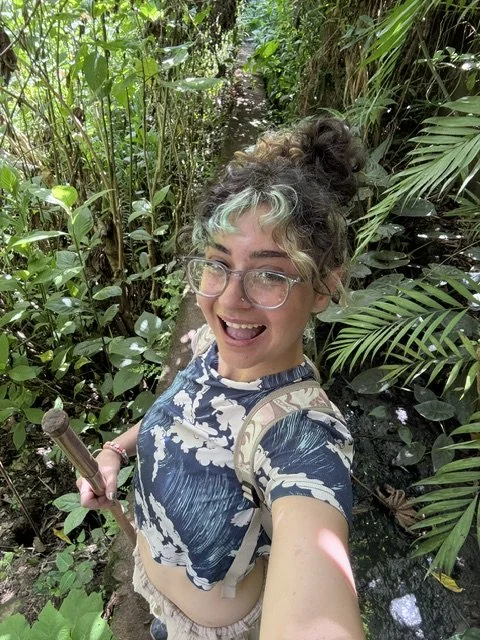
Much of my time at B. Willow has been spent creating botanical designs meant to replicate the essence of plants growing in the wild. B. Willow’s focus on education and highlighting the significance of the natural world is what initially drew me in, and I have loved the inspiration that comes with working in a botanical setting. The natural world has been a lifelong fascination of mine, starting out with a love for trees and flowers when I was younger, and morphing into special interests in plants and insects as I grew and studied art to become a botanical illustrator, which all led me to working as B. Willow’s botanical designer and workshop instructor! I recently got the opportunity to spend a week in Costa Rica’s Caribbean Coast and experience all of these plants and insects I had spent years drawing and observing in their natural forms. The best way to understand something is to experience it in its native habitat; a plant confined to a pot in the shade will look a lot different than a plant growing rampant on the jungle floor under the Caribbean sun, and being able to connect the houseplants I was used to to their wild counterparts was an enlightening and profoundly impactful experience.
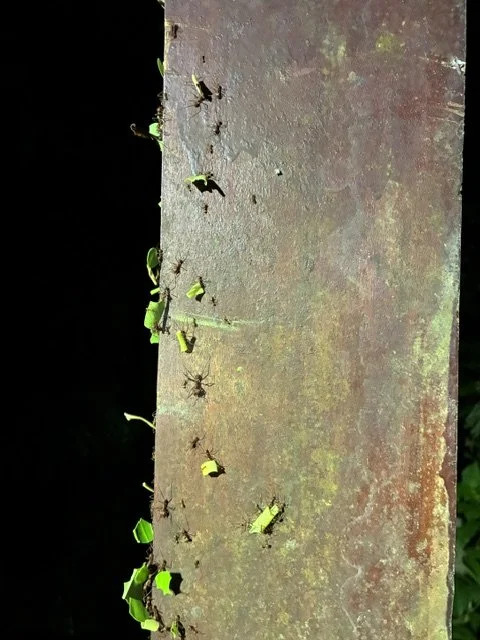
Insects are such a small, often overlooked part of life that most people don’t think twice about, but in Costa Rica, they are impossible to ignore! Their goliath sizes, radiant colors, and chirping calls demand attention. Blue Morpho butterflies the size of my hands fluttered by on a regular basis, spiders had homes in almost every nook and cranny, and we had to make a huge effort to avoid the complex trails of leafcutter ants traveling every which way. Insects are such sensitive, vulnerable creatures, and they are often one of the first signs in the decline of a healthy ecosystem. Their vulnerability paired with the significant impact they have on the environment is part of what makes them such fascinating creatures to me. I traveled to Costa Rica with the intention of observing these insects, but I left with a greater understanding of Costa Rica’s biodiversity and how many Costa Ricans live with a deeper appreciation and respect for the earth and our fellow residents, whether that be a human, a sloth in a tree, or a tiny bug on a leaf.
Costa Ricans live amongst nature in a way that I deeply admire. In Costa Rica, plants and other forms of wildlife are not seen as a luxury, decoration, or nuisance to be pruned away or “dealt with—” they are simply a part of life. Conservation is much more integrated into daily life as opposed to an option or a lifestyle that feels so forcibly intentional that it sets you apart from others. Being sustainable becomes less of a conscious effort, and more of a way of life. We stayed at a hostel called Planet Conservation which was founded by a lovely couple with a passion for practicing sustainability at the most basic level — from home. They taught us ways to be more mindful and intentional with our daily habits with the hopes that we can adopt sustainable practices to carry back with us to our respective countries and share with our communities. We did a beach cleanup and an on-site recycling workshop to melt down and reuse the plastics we collected and split our waste into different types of composts and recyclables, and went on tours led by indigenous community members and Puerto Viejo locals who shared how they practice sustainability and live off of the land and their respective communities.
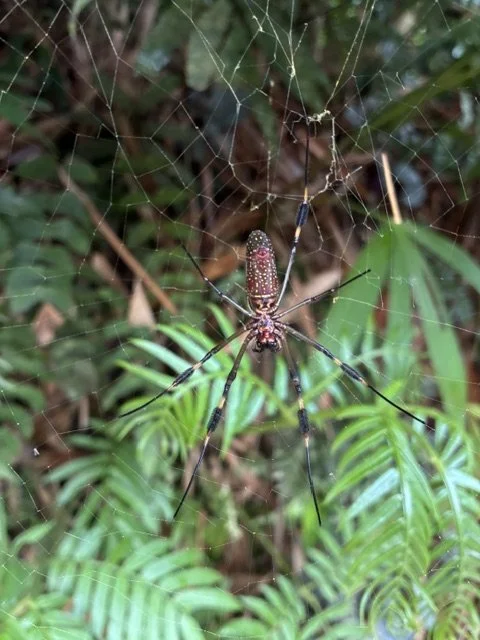
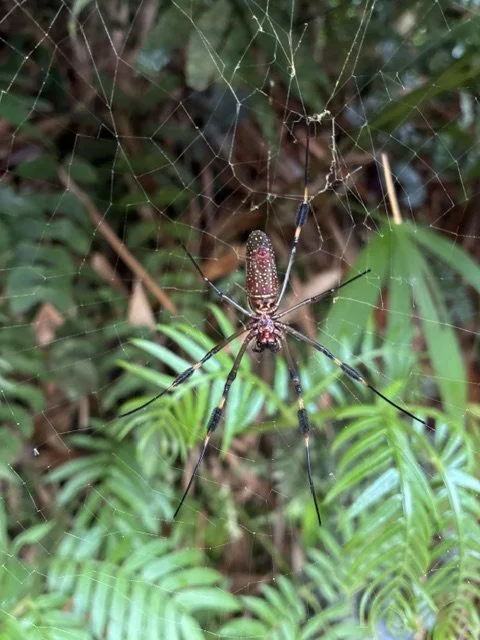
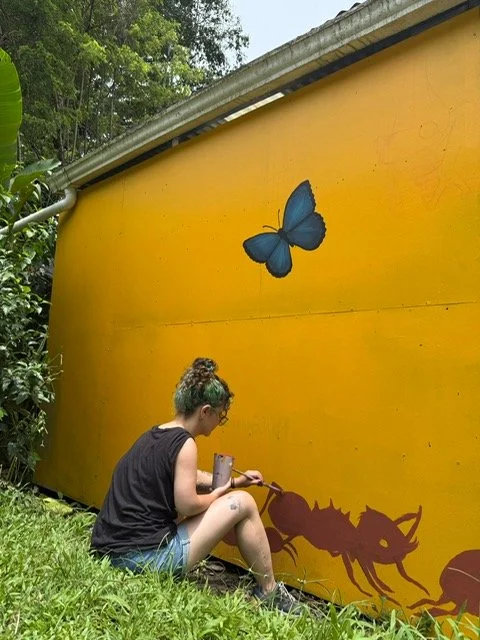
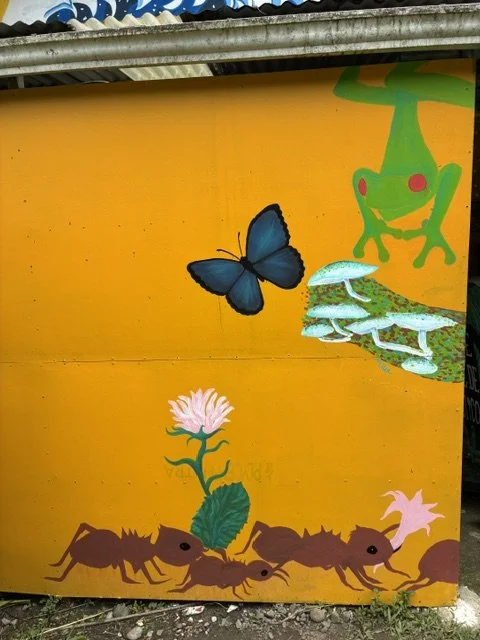
I worked on a mural on the outside of my hostel throughout my week that featured the insects and animals that stood out to us. My addition was the leafcutter ants, which brought our group together over our shared fascination, which quickly turned into fear after some of us were mistaken for leaves and badly bitten! Locals would often stop to talk to me about the insects I painted, and they shared their knowledge and experiences with them. Learning about these insects firsthand from people who lived alongside them as opposed to from a book or screen like I had before then was an invaluable experience. One lady walking her dog stopped to share advice on the best locations and time of day to spot some larger flying beetles and the fireflies. She shared that unfortunately, as much of an ecological paradise it may seem, that even Costa Rica was experiencing loss of wildlife and biodiversity due to high pesticide usage — one of the highest in the world. A property down the road from our buggy wonderland started using pesticides a few years back, resulting in the decline of much of the insect population. Firefly, butterfly, and bee populations, among other crucial pollinators, have been largely affected, while other less vulnerable species, such as the Triconephila Orb-Weaver Spider, have prevailed. These visually striking spiders are harmless to humans and have their own significant niche in the environment, but at the rate that they have been able to survive and repopulate compared to the more affected insects, their increased numbers and webs have only made matters worse for the remaining insects that often become trapped in the extra webs. Some of these insects, such as the bioluminescent click beetle, have exoskeletons that are sometimes too hard to even be eaten by these spiders, who spin them into cocoons regardless as they identify them as threats. The decreased numbers of these vital pollinator populations directly impacts the native plants, insects, and trees that depend on pollinators to reproduce.
The lack of bioluminescent insects we were trying to find stayed in my mind as I returned back to the US — I remember the clouds of fireflies surrounding my neighborhood at dusk. In recent years, I have only been able to spot sparse numbers on particularly nice summer nights. Our limited insect numbers are just a small snapshot of the environmental degradation we as a human race have subjected ourselves along with the rest of the globe and all of its residents to. Living in many parts of the US can feel so separated and disconnected from nature and the parts about life that are so important to remember — embracing life for its little moments, and not getting wrapped up in a consumerist, materialistic lifestyle. Living within your community and depending on your neighbors and family for life, instead of outsourcing everything from exploitative monopolies. And, always thinking of and remembering the insects at every moment; if the bugs are doing okay, then we can rest a little easier.